

Mergers and Acquisitions Trends in the Gold Industry: What Companies Need to Know
The gold mining sector is experiencing an unprecedented wave of consolidation, driven by record-high gold prices, strategic imperatives, and evolving market dynamics. As companies navigate this landscape, understanding the key drivers, risks, and due diligence requirements has become crucial for successful deal execution and value creation.
The Current M&A Landscape: A Golden Opportunity
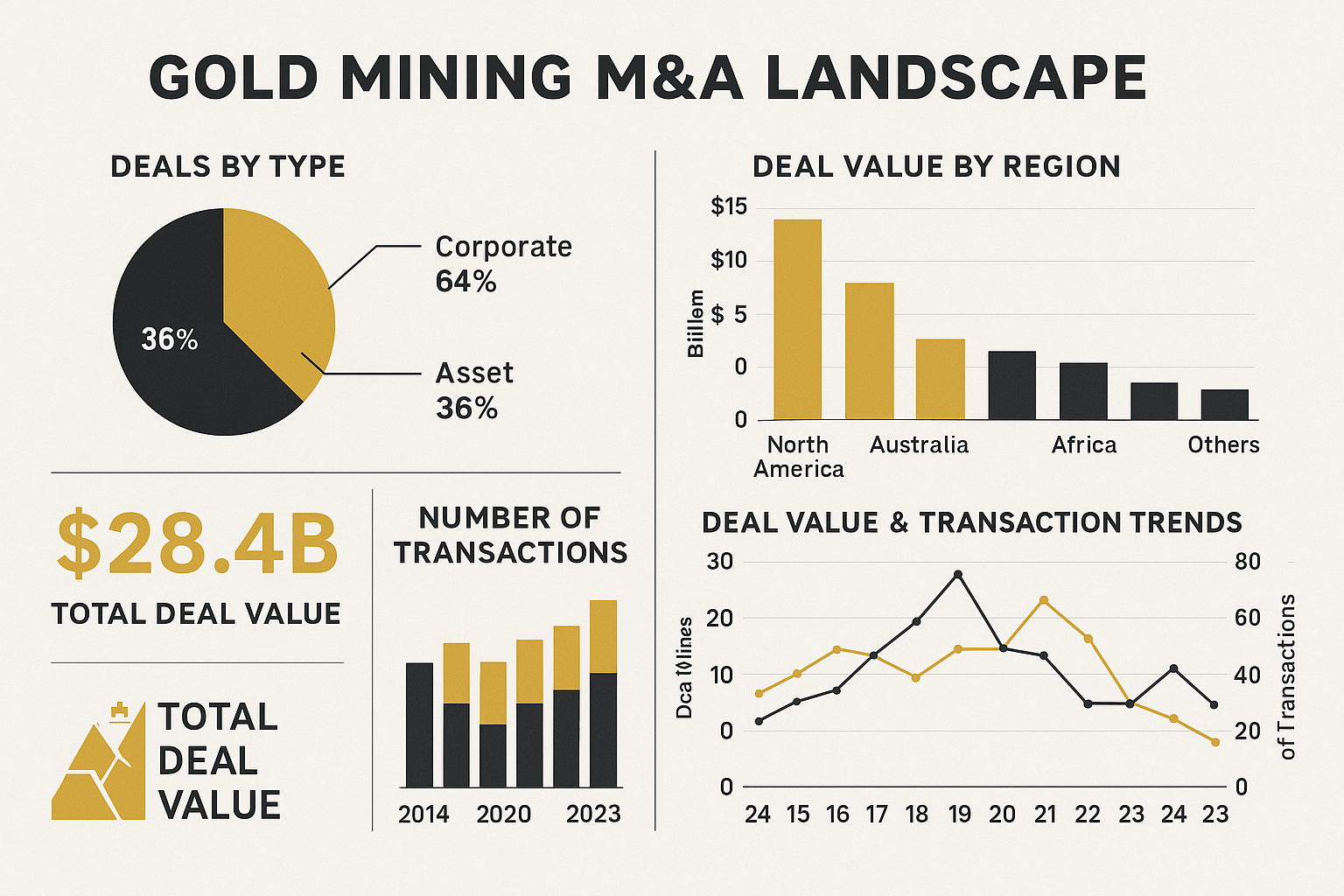
Gold mining mergers and acquisitions have reached remarkable heights in 2024, with deal activity surging 32% to 62 transactions compared to the previous year. The total transaction value remained robust at $26.54 billion, maintaining momentum from 2023's $26.36 billion despite the absence of mega-deals exceeding $10 billion.
This sustained activity represents the second consecutive year of gold dominance in mining M&A, with gold transactions accounting for 70% of total deal value and count in the metals and mining space. The trend reflects a fundamental shift in how companies approach growth, moving from organic expansion to strategic consolidation.
Major transactions have reshaped the competitive landscape, with Northern Star Resources' $3.26 billion acquisition of De Grey Mining leading 2024 activity, followed by AngloGold Ashanti's $2.48 billion takeover of Centamin. These deals exemplify the industry's focus on acquiring production-stage assets in stable jurisdictions, particularly in Australia and Canada. As recent market analysis shows, gold miners have substantially outperformed broader markets as surging prices have sparked increased M&A activity.
"I do believe it is special. It's going to prove to be maybe the greatest gold discovery in the history of Canada, if not in the world … so that's what makes it so easy for me to put that additional money in it."
Need Expert M&A Advisory Services?
Our team specializes in gold industry transactions and due diligence. Get professional guidance for your next deal.
Contact Our M&A ExpertsStrategic Drivers: What's Fueling the M&A Boom
Understanding the motivations behind gold mining consolidation reveals a complex interplay of strategic, operational, and regulatory factors. Industry analysis identifies several key drivers that companies must consider when evaluating potential transactions.
Reserve Replenishment: The Primary Catalyst
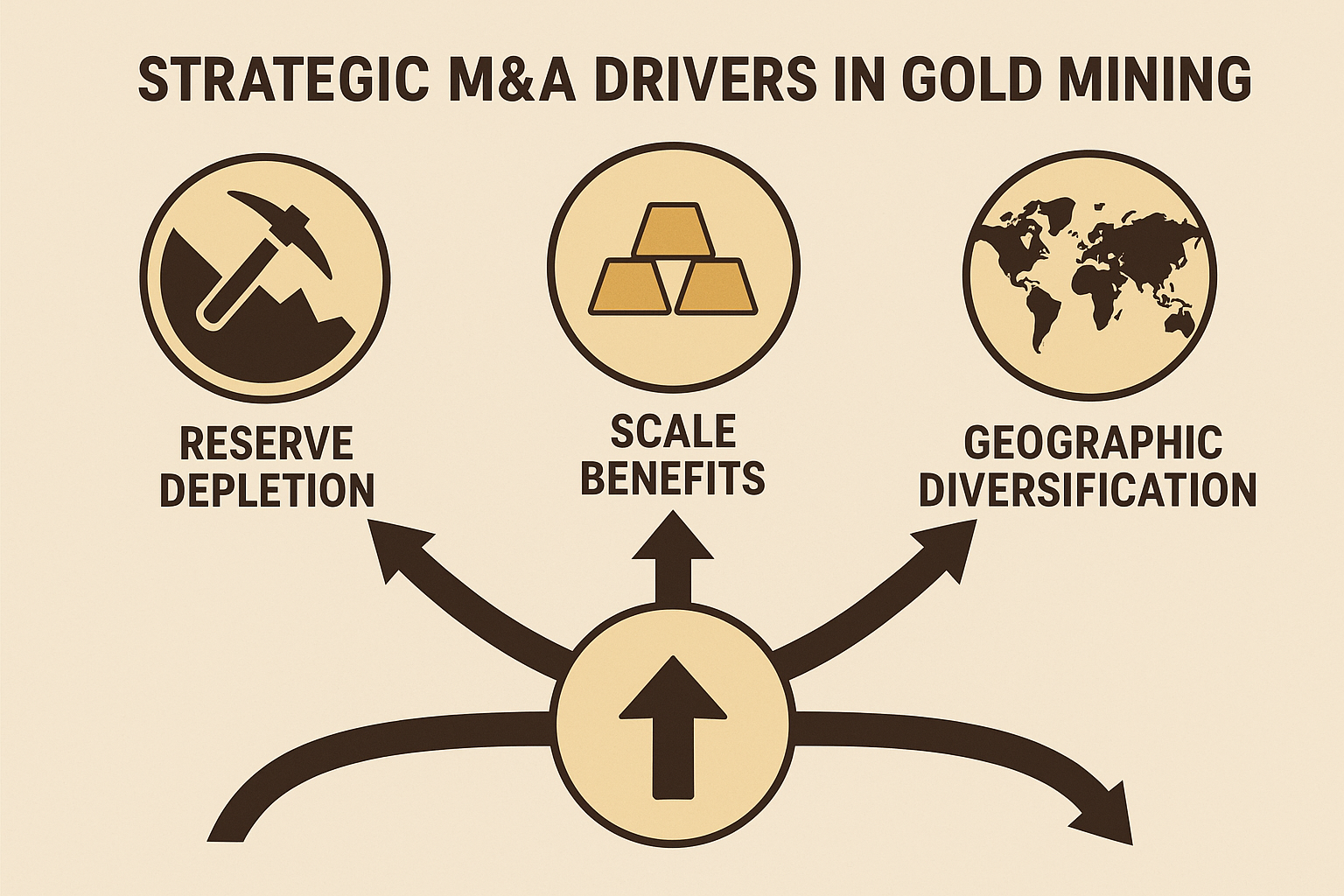
Reserve depletion stands as the most critical driver of M&A activity, with approximately 50% of global gold production coming from mines over 20 years old. Companies face the stark reality that organic growth has stagnated due to declining ore grades and the natural depletion of existing operations.
The challenge is particularly acute given that exploration success rates have declined while development costs have increased. Many major producers find it more cost-effective to acquire proven reserves through M&A rather than pursue the riskier path of greenfield development. This trend is evident across major producing regions, including Indonesian gold operations where established mines continue to play crucial economic roles despite declining ore grades.
Scale and Operational Synergies
The gold industry remains highly fragmented, with the top 10 producers accounting for less than 30% of global output. This fragmentation creates significant opportunities for consolidation, as companies seek to achieve economies of scale and reduce per-ounce production costs.
General and administrative costs have become a particular focus, with institutional investors demanding that companies consolidate assets and lower G&A expenses. Zero-premium mergers have emerged as a preferred structure, allowing companies to combine similar assets while eliminating redundant management teams and corporate overhead. Effective corporate governance frameworks are essential for realizing these operational synergies while maintaining stakeholder trust.
Geographic and Asset Diversification
Companies increasingly recognize the value of geographic diversification to mitigate jurisdictional risks. Single-asset companies face heightened vulnerability to political instability, regulatory changes, or resource nationalism in their operating regions.
Strategic acquirers prioritize assets in Tier 1 jurisdictions such as Canada, Australia, and the United States, where stable regulatory frameworks and established mining industries provide operational certainty. Singapore has emerged as a key regional hub for mining industry networking and financing, facilitating cross-border transactions and investment flows.
Regional Market Dynamics
The geographic distribution of M&A activity reflects both resource availability and jurisdictional preferences. Australia and Canada have emerged as the dominant markets, together accounting for nearly two-thirds of transaction value.
Australia leads with 35% of deal value, driven by its world-class gold deposits and mining-friendly regulatory environment. The country's established infrastructure, skilled workforce, and political stability make it the preferred destination for international investment.
Canada follows with 28% of activity, benefiting from similar advantages plus proximity to major North American capital markets. The country's mining expertise and regulatory framework continue to attract significant investment.
Africa represents 15% of transactions, primarily involving established operations in jurisdictions like South Africa and West Africa. While offering significant resource potential, African deals often require more complex risk assessment due to varying political and regulatory environments.
Valuation Trends and Deal Structures
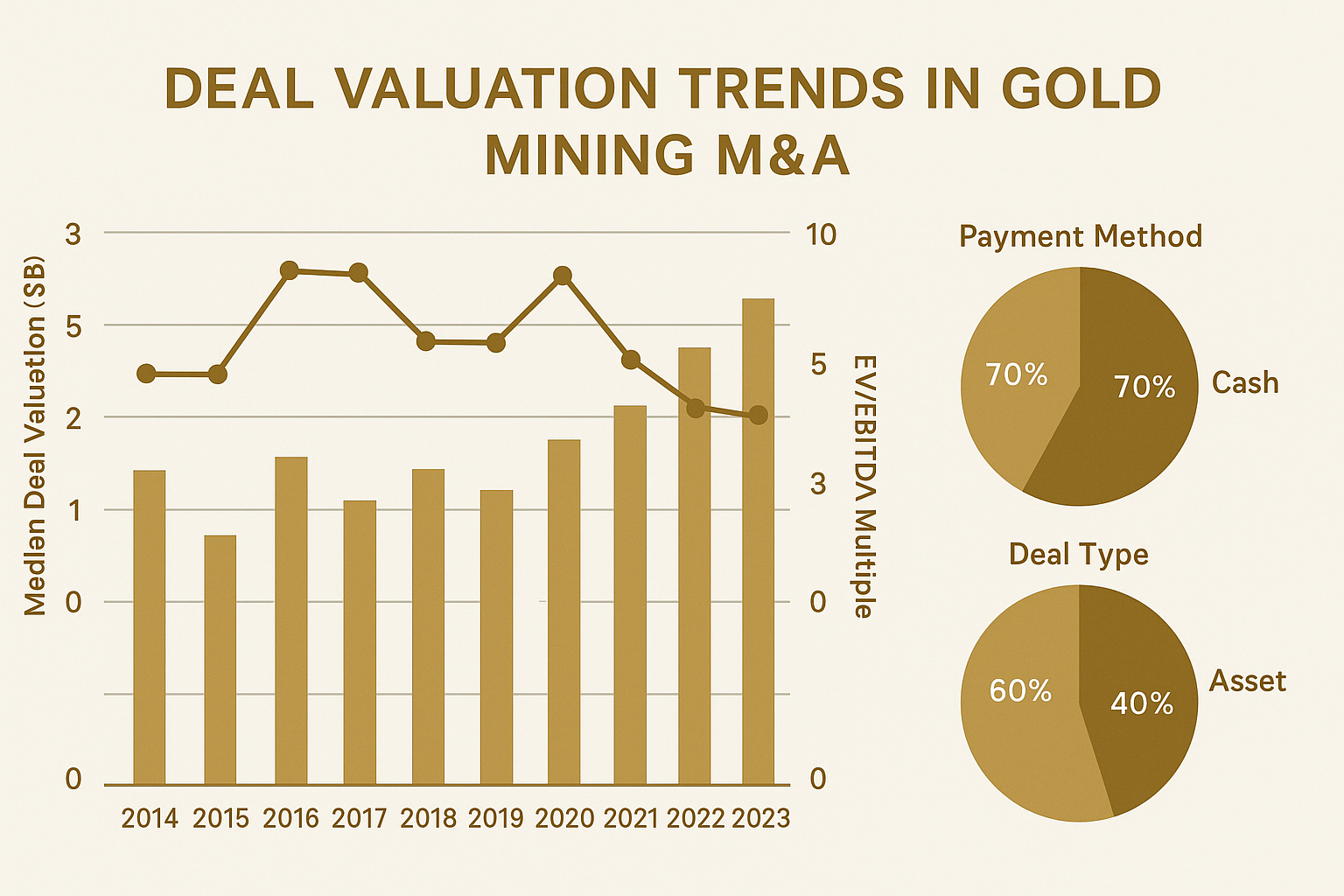
The current M&A cycle exhibits markedly different characteristics from previous gold booms, with companies demonstrating greater discipline in pricing and deal structure. The era of "crazy premiums" appears to be over, as investors and management teams apply lessons learned from previous cycles.
Premium Compression and Zero-Premium Deals
Unlike the 40-50% premiums common in the 2010-2011 gold boom, recent transactions show significantly compressed premiums. The trend toward zero-premium mergers of equals has gained traction, exemplified by Barrick Gold's acquisition of Randgold Resources and subsequent similar transactions.
This shift reflects shareholder scrutiny and management discipline, with companies recognizing that overpaying for acquisitions destroys long-term value. The focus has moved to creating operational synergies rather than simply paying for ounces in the ground.
Valuation Multiples and Metrics
Current EV/EBITDA multiples for major gold producers range from approximately 6x to 9x, with company-specific factors including operational efficiency, asset quality, and growth prospects influencing valuations. Companies generating strong free cash flow at above $3,000 gold prices generate unprecedented margins that provide acquisition currency without requiring dilutive equity financing.
Key Risks and Challenges
While the current environment presents significant opportunities, companies must navigate substantial risks that can derail transactions or destroy post-merger value creation.
Operational and Integration Risks
Integration complexity represents one of the most significant challenges in mining M&A. Unlike other industries, mining operations involve unique technical, regulatory, and operational considerations that can complicate post-merger integration.
Key operational risks include:
- Reserve and resource verification challenges
- Operational disruption during integration
- Cultural integration between organizations
- Technology system compatibility issues
- Regulatory compliance across multiple jurisdictions
Market and Commodity Price Volatility
Gold price volatility remains a fundamental risk factor that can dramatically impact deal economics. Companies must structure transactions to withstand commodity price cycles while maintaining financial flexibility.
The current high-price environment, while supportive of M&A activity, also creates risks if companies overpay based on peak pricing assumptions. Stress testing deal economics across various price scenarios becomes essential.
Due Diligence: A Comprehensive Approach
Successful gold mining M&A requires sophisticated due diligence processes that extend far beyond traditional financial and legal review. The complexity of mining assets demands specialized expertise and thorough risk assessment.
Technical and Operational Due Diligence
Geological and mining engineering assessment forms the foundation of mining due diligence. This includes:
- Reserve and resource verification by independent experts
- Mine plan optimization analysis
- Metallurgical testing and processing evaluation
- Infrastructure assessment and replacement capital requirements
- Operational cost benchmarking against industry standards
Environmental and Regulatory Compliance
Environmental due diligence has evolved from a compliance check to a comprehensive risk assessment covering current and future liabilities. Key areas include:
- Historical contamination and remediation obligations
- Permit compliance and renewal risks
- Tailings dam safety and closure costs
- Water rights and usage restrictions
- Climate change adaptation requirements
ESG Due Diligence Integration
ESG factors have become integral to deal evaluation, with studies showing that ESG due diligence can protect up to 10% of deal value. Companies must assess environmental, social, and governance factors as the industry shifts toward sustainable mining practices that emphasize environmental responsibility and community engagement.
Environmental Factors:
- Carbon footprint and emission reduction commitments
- Water usage and recycling programs
- Biodiversity impact and habitat protection
- Waste management and circular economy initiatives
Social Factors:
- Community relations and social license to operate
- Indigenous rights and Free, Prior, and Informed Consent (FPIC)
- Labor relations and workforce development
- Health and safety performance and culture
Strategic Recommendations for Companies
Based on current market dynamics and emerging trends, companies should consider the following strategic approaches:
For Potential Acquirers
- Focus on Quality over Quantity: Target Tier 1 assets in stable jurisdictions with long mine lives and expansion potential
- Emphasize Operational Synergies: Prioritize transactions that offer genuine cost reduction and operational improvement opportunities
- Strengthen Due Diligence Capabilities: Invest in ESG expertise and technical assessment capabilities
- Maintain Financial Discipline: Avoid the premium inflation that characterized previous cycles
- Plan Integration Early: Develop detailed integration plans before deal completion
For Potential Targets
- Optimize Asset Portfolio: Focus resources on core, high-quality assets while divesting non-strategic holdings
- Strengthen ESG Profile: Invest in community relations and environmental performance to attract premium buyers
- Improve Operational Metrics: Demonstrate cost control and operational excellence to maximize valuation
- Build Scale: Consider mergers of equals to achieve necessary market capitalization for institutional interest
- Maintain Strategic Optionality: Preserve financial flexibility to participate in consolidation opportunities
Ready to Execute Your M&A Strategy?
Whether you're buying or selling, our experts can guide you through every step of the transaction process.
Schedule a Strategic ConsultationNavigating the Golden Wave Forward
The gold mining industry's current consolidation wave presents both unprecedented opportunities and significant challenges. Companies that approach M&A with strategic discipline, comprehensive due diligence, and long-term value creation focus will be best positioned to succeed.
Success in this environment requires balancing multiple objectives: achieving operational scale while maintaining financial discipline, pursuing growth while managing risk, and meeting stakeholder expectations while creating shareholder value. The companies that master this balance will emerge as the industry leaders of the next decade.
As the sector continues to evolve, ESG integration, technological innovation, and community engagement will become increasingly important differentiators. Companies that embrace these trends while executing disciplined M&A strategies will create sustainable competitive advantages in an industry experiencing its most significant transformation in decades.
The golden wave of consolidation is far from over. Companies that prepare now with robust strategies, strong due diligence capabilities, and clear value creation frameworks will be best positioned to capitalize on the opportunities ahead while successfully navigating the inherent risks of this complex and dynamic sector.
Get Expert Guidance for Your Gold M&A Journey
Don't navigate these complex waters alone. Our experienced team is ready to help you identify opportunities, assess risks, and execute successful transactions in the gold mining sector.
Contact Us Today


