

Spencer Campbell
Director SE Asia Consulting - Precious Metals Consultant
OSM's Orion: Europe's Critical Minerals Opportunity

Full disclosure: I hold a position in ASX:OSM
Summary: If 30% of Osmond’s permit area is similar to their initial drilling results they will have the largest contained rutile and zircon deposit on the planet by a considerable margin and more rare earths than MP Materials and Lynas, the only two Western world miners of rare earths.
Anthony Hall, CEO of Osmond Resources, called me back in December 2024, and I could hear the genuine excitement in his voice as he walked me through what they’d found at Orion. He was animated, energized—the way people get when they think they’ve stumbled onto something genuinely significant. I remember telling him, with the directness that comes from over a decade watching exploration stories rise and fall, to dial it back. Manage expectations. Let the geology speak for itself. These conversations typically end one of two ways: either the story holds up and you look prescient, or it doesn’t and you look foolish for getting caught up in enthusiasm.
A year ago almost to the date, OSM was trading around A$0.40. The stock ran to highs of A$1.12 as drill results came in, and has since pulled back to A$0.75. Here we are, and the market is treating that selloff as a reason to walk away. I think they’re missing the point entirely.
June 2025 - I'm off to Sunny Spain y viva España
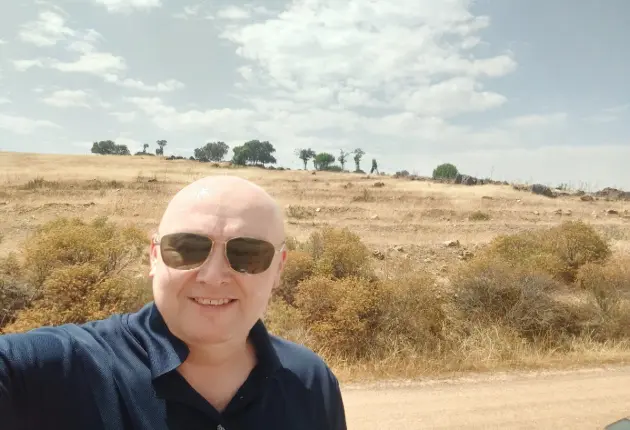
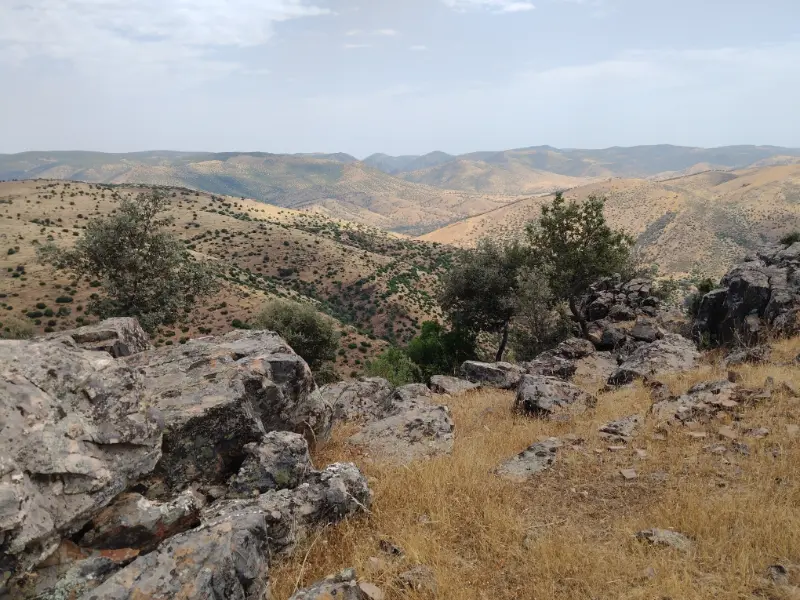
Back in June I made the journey down to Jaén Province in southern Spain to see Osmond’s Orion Project first-hand. Not just a quick fly-in corporate tour—I spent proper time on the ground with Anthony and the senior technical team, driving between zones, standing on outcrops, and talking through the geology and the plan.
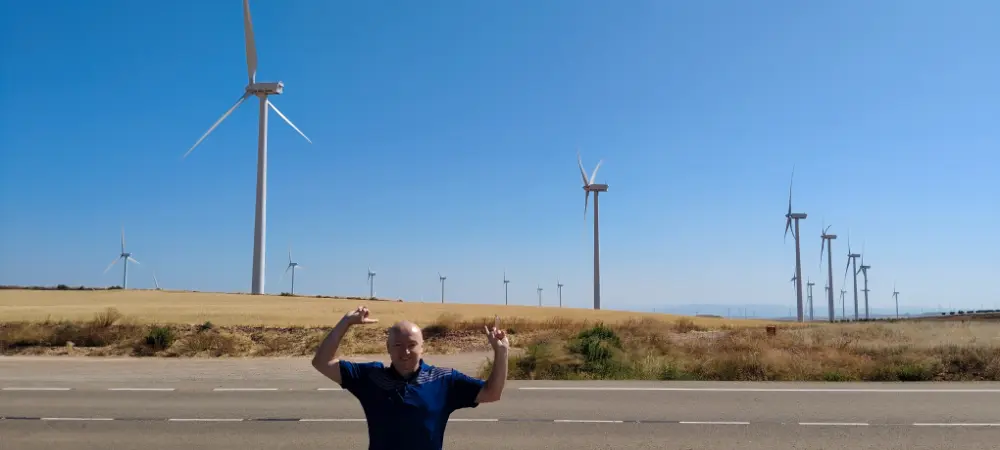
What struck me immediately was the landscape itself: wind turbines everywhere, stretching across the horizon in every direction. Over a decade traveling the world, I’ve never seen density like this.
Spain has become wind and solar self-reliant, and you see it written across that landscape. Within a few hours of walking that ground and talking with the geologists, I understood exactly why Anthony had been so animated on that December call. This wasn’t hype. This was justified conviction.
After over a decade in precious metals and mining, you develop a feel for when something’s genuinely different versus just another exploration story dressed up in a nice presentation. Orion struck me as the former.
What I Saw On The Ground
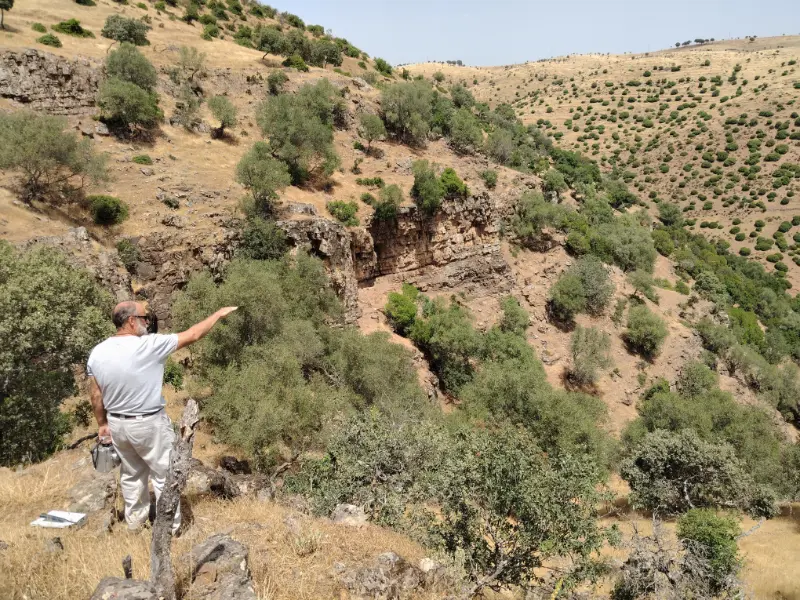
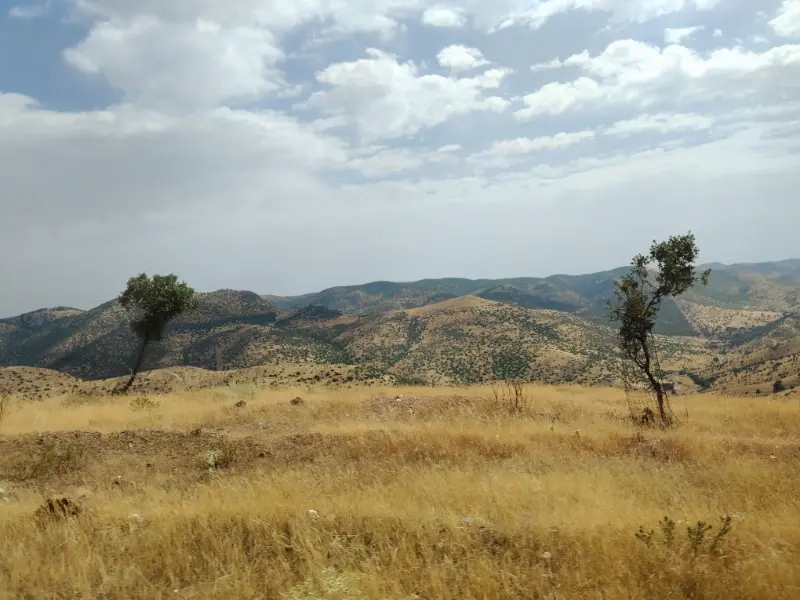
The Orion Project sits on 228km² of what used to be a Precambrian seabed. The geologists were showing me these reddish-brown quartzite outcrops—the Pochico Formation—that run for kilometres across the landscape. This isn’t some narrow vein you’re hoping extends 50 meters down-dip. It’s blanket-style mineralisation in sedimentary layers that were laid down across an entire ancient marine environment.
We spent hours driving between Zone 1, Zone 2, and Zone 3—12 kilometres east to west where they’ve confirmed mineralised outcrops. Fernando Palero Chief Geologist explained how the depositional environment should mean this continues across substantial portions of the permit area, barring major erosional events. Standing there looking at those surface expressions, then seeing the consistency in the bulk samples they’d taken months earlier—13-15% rutile, 9-10% zircon, 1.2% TREO—it started clicking into place.
What really drove home the scale picture was hearing them walk through comparable deposits. The grades at Orion—double-digit percentage TiO2 and ZrO2—are simply not normal. Most rutile projects globally run 1-2% TiO2. Most zircon deposits run at less than that. Orion is running 15-19% TiO2 (over 15% rutile) and 5-7% ZrO2 (10% zircon) in the primary layers. That’s 10 times higher grade than peer deposits. Combined with the district-scale footprint, you’re looking at contained metal volumes that dwarf virtually anything else in the pipeline.
The Drill Results Everyone's Overthinking
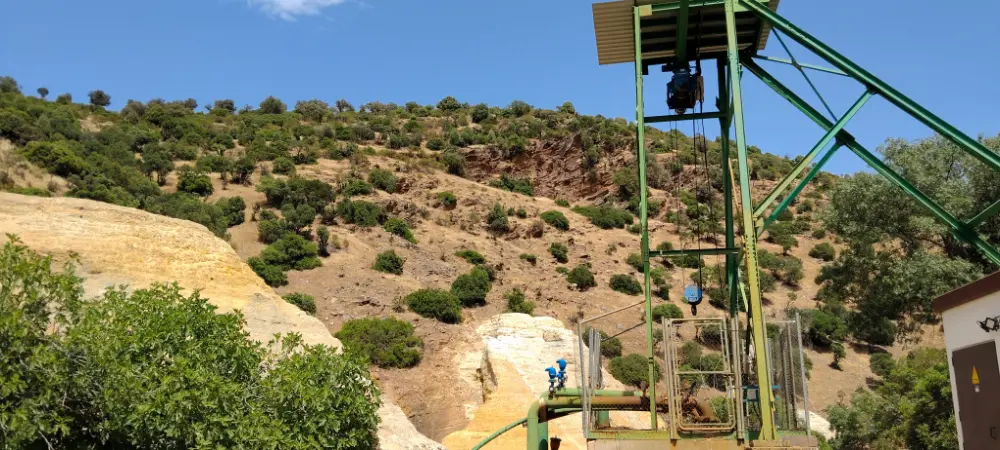
Since that June visit, three holes have come back with assays. Markets got excited about the first hole AV-01: 1.5m at 15.92% TiO2, 5.67% ZrO2, 1,225ppm HfO2, 1.15% TREO. Then hole AV-01bis from the same location confirmed it—actually improved on it with 1.8m at 19.07% TiO2, 6.84% ZrO2, 1,517ppm HfO2, 1.29% TREO.
Then came SOR-02, 1.7 kilometres away, with slightly lower grades: 0.6m at 14.60% TiO2, 4.56% ZrO2, 970ppm HfO2, 0.863% TREO. And that’s when the market started selling. “Grade variability.” “Not consistent.” Missing the entire point.
Look—I don’t care if every hole doesn’t hit 19% TiO2. What matters is that you’ve got a primary 3-meter-thick mineralised seam that’s running 10-15% rutile and 6-10% zircon over multiple drill holes across 1.7km of strike. That’s confirmation of a mineralizing system, not grade lottery tickets. These grades are still 10 times what most rutile and zircon projects deliver.
The Scale Arithmetic Nobody's Doing
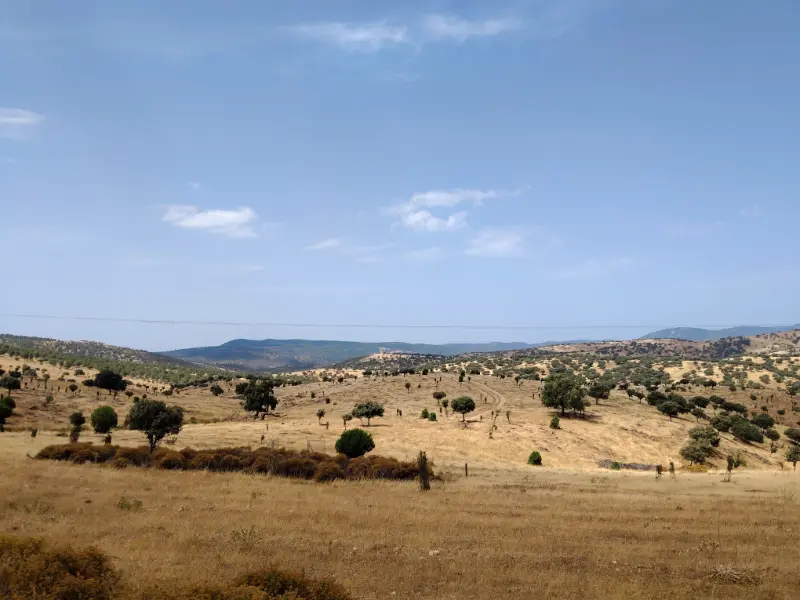
Let me walk through the numbers, because this is where it gets interesting.
The permit covers 228km². Let’s be conservative and say only 30% of that area hosts the 3-meter primary seam at average grades. That’s 68.4km²—a big number, but geologically reasonable given what they’re seeing.
At 2.9 g/cm³ density, 3-meter thickness, and average grades from the drilling (10.2% rutile, 6.1% zircon, 0.72% TREO for the broader primary seam), you get:
- 60.7 million tonnes of contained rutile
- 36.3 million tonnes of contained zircon
- 4.28 million tonnes of contained TREO
That’s not speculation. That’s arithmetic.
For context, MP Materials’ Mountain Pass—the only operating rare earth mine in the US and a strategic asset—contains about 1.36 million tonnes of REO in reserves. Orion at 30% permit coverage would have 3.2 times more contained TREO.
Sovereign Metals’ Kasiya in Malawi—which everyone calls the world’s largest rutile deposit—has around 20 million tonnes of contained rutile. Orion would have 3 times that.
The highest-grade zircon deposit globally, PYX Resources’ Mandiri in Indonesia, has about 6 million tonnes of contained zircon. Orion could have 6 times that volume.
But here’s the real kicker: Orion at 30% permit coverage could potentially host 10 times the contained rutile of most other rutile projects in development, and 10 times the contained zircon and TREO compared to peer deposits. In terms of scale and grade combined, it’s not just bigger—it’s materially different from the pipeline.
Why European Location Multiplies This
Here’s what markets haven’t priced in yet: Europe is in an existential crisis on critical minerals, and it’s about to get worse.
The EU extracts no rare earths and imports over 98% of rare earth magnets and 90% of rare earth refining comes from China. Europe has basically zero domestic production of rutile, zircon, hafnium, or separated rare earths. On the titanium front, the United States doesn’t even produce titanium metal domestically—they import it entirely. Europe’s in a similar bind – it extracts no titanium (or zircon for that matter). These are foundational industrial materials that Western economies have completely outsourced.
This problem just got acute. Trump is now forcing EU countries to spend 5% of GDP on defence, up from the current 2-3% levels. That’s an enormous economic shock that’s forcing Europe to reassess where its critical supply chains sit. Defence systems—missiles, fighters, radar, electronics—are voracious consumers of rare earths, titanium, and zircon. You cannot build a credible European defence industrial base without securing domestic sources of these materials.
When China tightened rare earth export controls in 2025, European automakers literally had to halt production lines. That’s a national security problem. Now add military rearmament to the equation. The policy response has shifted from “nice-to-have” to existential urgency.
Spain is now wind and solar self-reliant, achieving what most European countries are still struggling with. But that energy infrastructure—thousands of turbines across Andalucía—depends entirely on critical minerals for magnets, titanium components, and zircon-based ceramics. Europe can’t sustain or expand renewable energy without securing domestic critical minerals supply. Orion sits geographically positioned to supply exactly what keeps that infrastructure functioning and scaling.
The EU Critical Raw Materials Act mandates that by 2030, no single non-EU country can supply more than 65% at any processing stage. The RESourceEU Action Plan just mobilized €3 billion specifically for critical minerals projects over the next 12 months.
Spain has seven EU strategic projects—tied for the highest in Europe—focused on critical minerals. Jaén Province has been mining since Roman times. There’s skilled labour, transport infrastructure, and a provincial government that understands mining.
The Commodity Mix Is Perfect
Rutile trades at a significant premium to ilmenite—current numbers suggest around $1,800 v $400 per tonne—because it’s >95% TiO2. Osmond’s bulk samples show rutile comprises over 95% of the titanium mass.
Global rutile supply is constrained. Kenya’s Kwale is approaching end-of-life around 2034-2035, Sierra Rutile is still on care-and-maintenance. The rutile market is projected to hit $7.43 billion by 2035 at 5.2% CAGR.
Hafnium has seen prices surge 300-400% since 2022—now sitting at $4,730-$9,500/kg—driven by aerospace, nuclear, and semiconductor demand. Europe produces essentially zero hafnium domestically yet it’s designated a critical raw material.
The rare earth component—TREO grades of 0.7-1.3% including 21-27% magnetic rare earth oxides (MREO)—adds serious economic leverage. Europe is targeting 20% domestic rare earth magnet supply by 2030 from less than 1% today. With defence spending now mandate-driven and renewable energy expansion accelerating, that target will need to move faster.
The Logistics Story Most Explorers Miss
The Orion site is well-positioned to produce high-grade concentrates in Spain and truck them north into France where significant processing infrastructure already exists or is being built out as part of Europe’s critical minerals push. The road network is excellent, the border crossing is seamless, and France has the industrial base and regulatory framework to handle downstream processing.
Técnicas Reunidas, a major Spanish engineering firm, is currently leading a project to create the first European value chain for the production of permanent magnets. They’re building out the exact downstream infrastructure that a project like Orion would feed into. This isn’t hypothetical future demand—the industrial architecture is actively being constructed right now to process rare earth concentrates into separated oxides and then into magnets for EVs, wind turbines, and defence applications.
You’re not building a greenfield processing plant. You’re producing concentrates compatible with existing and planned EU industrial capacity.
What The Market's Actually Pricing
OSM trades around a A$99 million market cap (less than A$200 million fully diluted). For context, that’s what you pay for 2-3 drill holes of confirmation in a European critical minerals system that could potentially host 10 times the scale of most peer deposits, with 10 times the grades, in a jurisdiction that’s about to face defence-driven and energy-sustainability-driven supply chain urgency.
Seven drill holes completed, multiple assays pending, scoping study targeted for 1H 2026.
My Take on the Osmond Resources Orion Project
A systematically delineated world-scale sedimentary system in the heart of Europe—potentially 10 times the scale and grade of peer deposits—positioned at a moment when Europe is committing billions to reshoring critical minerals while facing military necessity to secure defence-industrial supply chains and the urgent need to sustain renewable energy infrastructure.
The project opportunity is straightforward: worst case is a mid-sized European heavy mineral project; base case is a globally significant multi-commodity operation with sensible logistics into French and Spanish processing hubs being constructed right now; best case is a generational asset that reshapes EU critical minerals supply chains and becomes essential infrastructure for both energy sustainability and defence autonomy.
Could drilling disappoint? Of course. That’s mining. Could commodity prices weaken? Sure. But the asymmetry is compelling. The selloff from A$1.12 to A$0.75 clears out speculative froth. What remains is worth watching closely as the next drill holes come through and the scoping study advances.
Drilling could also be better than expected. There were 4m+ outcrops reported to the market.
Disclaimer: This article is a personal opinion piece and does not constitute investment advice. The author holds a position in ASX:OSM and has received no compensation for this article. Past performance is not indicative of future results. Mining and exploration investments carry significant risk, including exploration risk, commodity price risk, jurisdictional risk, and execution risk. Readers should conduct their own due diligence and consult with licensed financial advisors before making any investment decisions. The information presented is based on publicly available announcements, site observations, and market analysis current as of December 2025. All forward-looking statements are subject to risks and uncertainties that could cause actual results to differ materially.
Spencer Campbell
Director SE Asia Consulting - Precious Metals Consultant
Spencer Campbell is a precious metals consultant and Director of SE Asia Consulting Pte Ltd in Singapore. He specializes in gold refining, bullion markets, responsible sourcing, and mining advisory across Asia and Africa. Through seasia-consulting.com, Spencer provides independent, practical guidance on buying, selling, and understanding physical gold, silver, and other precious metals in today’s global market.


